
A Practical Guide to Fire Alarm Systems in Abu Dhabi: Installation, Maintenance and Compliance
A Practical Guide to Fire Alarm Systems in Abu Dhabi: Installation, Maintenance and Compliance
Fire safety in Abu Dhabi operates within a tightly regulated framework. It is not treated as an afterthought or a secondary system. Instead, it is built into the core of how residential, commercial, and industrial spaces function.
A fire alarm system in abu dhabi is expected to do more than detect smoke or heat. It must respond quickly, communicate clearly, and integrate with multiple building systems at the same time. When any one of these elements fails, the entire safety chain weakens.
Understanding how these systems are installed, maintained, and regulated helps avoid both safety risks and compliance issues.
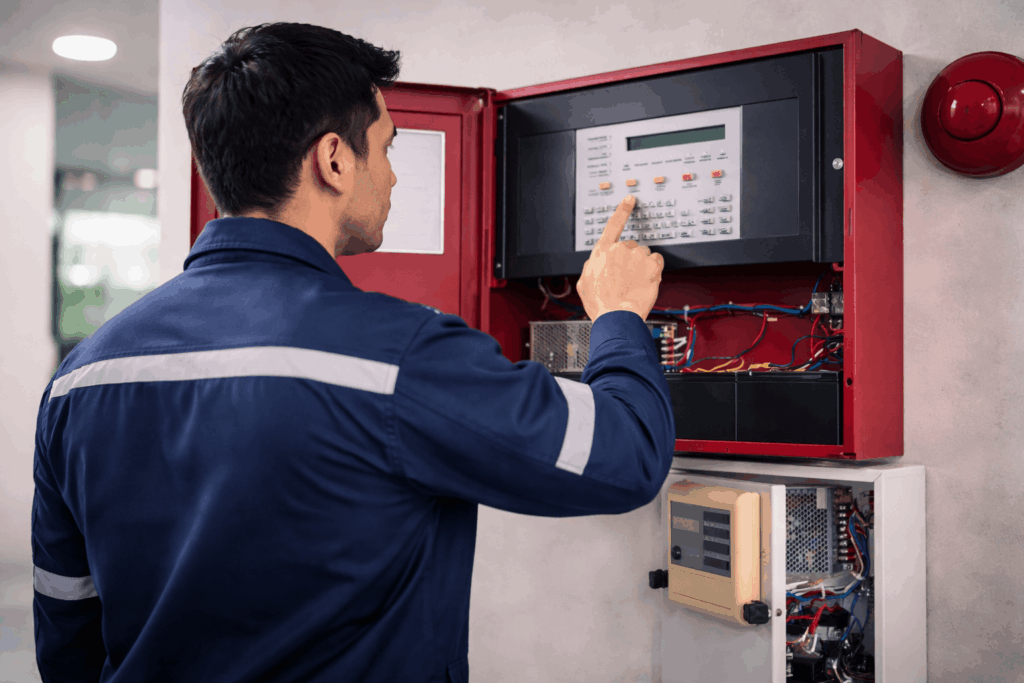
What a Fire Alarm System Actually Does
At a basic level, a fire alarm system detects danger and alerts occupants. In practice, the process is more layered than that.
Detection devices are placed across different zones based on risk levels. Smoke detectors are common in enclosed spaces, while heat detectors are often used in areas like kitchens or mechanical rooms. Flame detectors may be required in high-risk industrial environments.
All of these devices report back to a central Fire Alarm Control Panel. The panel constantly receives signals, checks for irregularities, and determines whether an alarm condition exists.
Once triggered, the system does not stop at sounding an alarm. In many buildings, it automatically initiates a sequence of actions. Elevators may return to ground level, emergency lighting is activated, and suppression systems are put on standby or triggered.
The strength of a fire alarm system in Abu Dhabi lies in how smoothly these actions happen together, not just in how fast a detector reacts.
Installation in Abu Dhabi: More Than Just Setup
Installation is where most compliance issues begin if not handled properly.Every system must follow the UAE Fire and Life Safety Code of Practice along with NFPA 72 standards. These are not flexible guidelines—they are enforced during approvals and inspections.Only approved contractors are allowed to carry out installation work. Choosing a certified fire fighting company in Abu Dhabi is essential, not just for compliance but also for long-term system reliability.Certain technical expectations are often overlooked during planning:The control panel cannot be placed randomly. It must be installed in an area that is continuously monitored. In many buildings, this ends up being a security room or reception area where staff are present at all times.Power backup is another non-negotiable requirement. Systems must remain operational even during outages, which means batteries or UPS systems must support extended standby time along with active alarm conditions.Integration is equally important. Fire alarm systems are expected to communicate with elevators, emergency lighting, and suppression systems. In larger developments, this integration becomes more complex and requires careful planning.Before a building is occupied, an ADCD No Objection Certificate must be obtained. Without it, the system is considered incomplete regardless of installation status.
Hassantuk and Continuous Monitoring
One of the more significant changes in recent years is the adoption of the Hassantuk system across Abu Dhabi.
Instead of functioning as a standalone system, a fire alarm setup is now connected to a centralized monitoring network. When an alarm is triggered, the signal is transmitted immediately to an external monitoring centre.
This shift changes how incidents are handled. Alerts are reviewed in real time, and emergency services are dispatched without waiting for manual confirmation from the building.
Hassantuk also tracks system health. Issues such as power failure, communication loss, or device faults are flagged early. This reduces the chances of unnoticed failures.
Because of this, compliance is no longer limited to installation alone. Continuous connectivity and system health have become part of the requirement.
Hassantuk and Continuous Monitoring
One of the more significant changes in recent years is the adoption of the Hassantuk system across Abu Dhabi.
Instead of functioning as a standalone system, a fire alarm setup is now connected to a centralized monitoring network. When an alarm is triggered, the signal is transmitted immediately to an external monitoring centre.
This shift changes how incidents are handled. Alerts are reviewed in real time, and emergency services are dispatched without waiting for manual confirmation from the building.
Hassantuk also tracks system health. Issues such as power failure, communication loss, or device faults are flagged early. This reduces the chances of unnoticed failures.
Because of this, compliance is no longer limited to installation alone. Continuous connectivity and system health have become part of the requirement.
Maintenance Is Where Most Systems Fall Behind
Even well-installed systems can become unreliable over time. This is where maintenance plays a critical role.
In Abu Dhabi, fire alarm system maintenance is mandatory. It is not treated as a recommendation or best practice. Buildings must operate under an Annual Maintenance Contract.
Working with an experienced firefighting company in abu dhabi ensures that maintenance is carried out correctly and documented properly.
Maintenance is usually structured in layers rather than a single routine check.
Basic checks are done regularly to confirm that the system is active and responsive. These include verifying alarms, indicators, and communication signals.
More detailed inspections focus on detector performance. Sensitivity levels are tested to ensure that devices respond within acceptable thresholds.
Annual inspections go deeper. The entire system is tested under load conditions, and all components are evaluated for compliance.
One detail that often gets overlooked is documentation. Maintenance logs, service reports, and testing records must be maintained consistently. During inspections, missing records can lead to non-compliance even if the system is functioning.
Common Issues Seen During Inspections
Inspection failures are rarely caused by a single major fault. In most cases, they result from smaller issues that build up over time.
Documentation gaps are one of the most common problems. Without proper records, it becomes difficult to verify whether maintenance has been carried out as required.
Environmental conditions in Abu Dhabi also affect system performance. Dust accumulation inside detectors can reduce sensitivity or trigger false alarms. Humidity can have a similar impact over time.
Changes within the building often create unexpected issues. Adding partitions, shifting storage, or modifying layouts can block detectors or manual call points.
Older systems present another challenge. Panels that do not support newer standards or integration requirements may fail to meet current compliance expectations.
A qualified firefighting company in Abu Dhabi typically identifies these issues during routine inspections and addresses them before official audits.
Regulations and Consequences of Non-Compliance
Fire safety regulations in Abu Dhabi are actively enforced, with regular inspections carried out by the authorities.
Buildings are expected to maintain fully operational systems at all times, along with active monitoring connections and proper documentation.
Penalties for non-compliance can range from minor fines to more serious consequences, including operational restrictions. In some cases, buildings may not be allowed to function until all issues are resolved.
This approach reflects how seriously fire safety is treated within the region.
Where Fire Alarm Systems Are Heading
Technology is gradually changing how fire alarm systems are managed.
Newer systems are beginning to use predictive methods to identify faults before they occur. Instead of waiting for a failure, data from the system is used to detect patterns and trigger early warnings.
In large open spaces, visual and thermal detection methods are being introduced. These systems are designed to identify fire risks in environments where traditional detectors may not respond quickly enough.
There is also a noticeable shift toward integration with smart building platforms. Fire safety is becoming part of a broader ecosystem that includes energy management, security, and facility operations.
Choosing the Right Service Provider
The performance of a fire alarm system is closely tied to the expertise behind it.
An experienced provider will understand not only installation but also compliance, inspection processes, and long-term system behavior.
Approval from ADCD is essential, but experience across different project types also matters. Complex buildings require a deeper understanding of system integration and coordination.
A reliable fire fighting company in abu dhabi typically offers complete support, from initial setup to ongoing maintenance, ensuring that the system remains compliant and functional over time.
Conclusion
Fire alarm systems in Abu Dhabi are part of a broader safety framework that combines regulation, technology, and ongoing system management.
Their effectiveness depends on more than just installation. It requires consistent maintenance, proper documentation, and alignment with evolving standards.
When these elements are handled correctly, the system operates as intended—quietly, continuously, and reliably in the background, ready to respond when needed.