
Common Fire Safety System Failures That Regular Maintenance Can Prevent
Common Fire Safety System Failures That Regular Maintenance Can Prevent
Fire safety systems are designed to respond instantly when an emergency occurs. However, in many buildings system failures do not happen suddenly. They usually develop slowly over time due to environmental conditions, ageing components, or small issues that remain unnoticed.
In a city like Abu Dhabi, where high-rise developments and commercial complexes are common, the reliability of fire protection systems becomes even more critical. When systems are not inspected regularly, minor faults can grow into major failures that prevent equipment from working during an emergency.
Regular fire fighting system maintenance plays a crucial role in identifying these problems early and ensuring that fire protection equipment remains operational when it is needed most.
Why Fire Safety Systems Fail Over Time
Most fire protection systems are built to last for many years, but they still require routine inspection and servicing. Dust, humidity, heat, and human error can gradually affect system performance.
In Abu Dhabi, environmental conditions add another layer of stress. Fine desert dust can accumulate inside smoke detectors, extreme temperatures can degrade wiring insulation, and coastal humidity may accelerate corrosion in sprinkler pipes.
Without regular firefighting system maintenance, these small issues may remain unnoticed until the system is tested or an emergency occurs.
Smoke Detector and Fire Alarm Failures
Smoke detection systems are among the most important parts of any fire protection system. However, they are also highly sensitive to environmental factors.
Dust and debris often accumulate inside detector chambers. Over time, this contamination can interfere with the sensor’s ability to detect smoke accurately. In some cases detectors may trigger frequent false alarms, while in other situations they may fail to respond when smoke is present.
Another common issue involves battery capacity loss. Backup batteries may appear functional during routine voltage checks but fail to provide sufficient power during a real outage.
Regular fire fighting system maintenance allows technicians to clean sensors, recalibrate detector sensitivity, and test backup batteries under load conditions to ensure the system remains reliable.
Fire Sprinkler System Failures
Sprinkler systems are designed to control fires automatically, but several issues can prevent them from functioning correctly.
One of the most common causes of failure is closed control valves. During repair work or maintenance activities, valves may be shut temporarily and sometimes remain closed unintentionally. If a fire occurs while valves are closed, the sprinkler system will not deliver water effectively.
Internal pipe corrosion is another frequent problem, especially in humid environments. Rust buildup can restrict water flow or create small leaks that weaken system performance.
Routine inspections and fire fighting system maintenance help identify these issues early by checking valve positions, examining sprinkler heads, and inspecting internal piping conditions.
Emergency Lighting and Exit Sign Failures
Emergency lighting systems are essential during power outages or evacuation situations. These systems guide occupants safely toward exit routes when normal lighting is unavailable.
Battery degradation is one of the most common causes of emergency lighting failure. Over time, batteries lose their ability to hold a charge, particularly in hot climates where high temperatures accelerate battery wear.
Other issues may include burned-out bulbs or faulty wiring connections that develop gradually due to corrosion or humidity.
Scheduled fire fighting system maintenance includes functional testing of emergency lighting and exit signs to ensure that backup power systems operate correctly during emergencies.
Fire Extinguisher Deficiencies
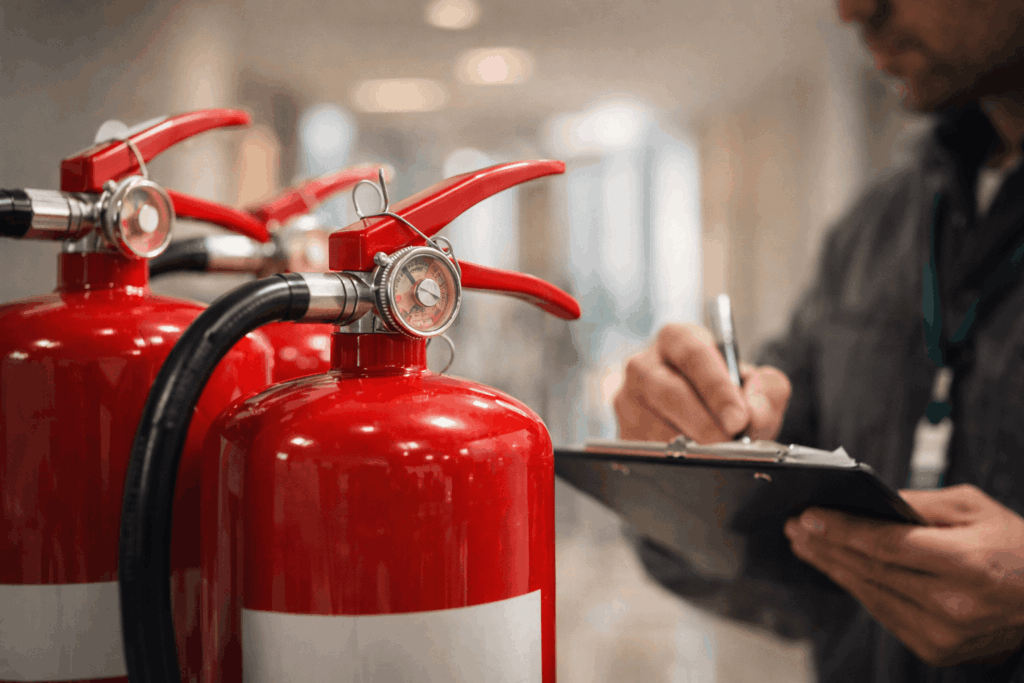
Fire extinguishers are often the first line of defense against small fires, but they are frequently overlooked during routine safety checks.
Pressure loss is a common problem that occurs when extinguishers slowly leak over time. In other cases, chemical agents inside the extinguisher may settle or degrade, reducing their effectiveness.
Physical damage is another concern. Corroded canisters, cracked hoses, or missing safety pins can make extinguishers difficult or impossible to use during emergencies.
Regular inspections as part of fire fighting system maintenance help identify these issues and ensure that extinguishers remain ready for immediate use.
High-Rise Building System Risks in Abu Dhabi
High-rise buildings introduce additional safety challenges. Systems such as stairwell pressurization fans and voice evacuation systems must operate correctly during emergencies to protect occupants.
Pressurization fans keep stairwells clear of smoke during evacuations, allowing people to exit safely. If these fans fail due to poor maintenance or power supply issues, escape routes may quickly fill with smoke.
Communication systems are equally important. Voice evacuation systems provide instructions during emergencies, guiding occupants on whether to evacuate or remain in place.
Consistent fire fighting system maintenance ensures that these complex systems are tested regularly and remain fully operational.
Environmental Factors Unique to Abu Dhabi
Environmental conditions in Abu Dhabi create challenges that are not always considered in standard maintenance guidelines.
Desert dust can infiltrate sensitive equipment such as smoke detectors and control panels. High temperatures may weaken electrical connections through repeated thermal expansion and contraction. Coastal humidity can accelerate corrosion in metal components and sprinkler pipes.
Because of these factors, maintenance procedures often include specialized cleaning, inspection of electrical panels, and detailed system testing.
Regular fire fighting system maintenance helps address these regional risks and ensures systems remain reliable despite challenging environmental conditions.
The Importance of Professional Maintenance Services
Maintaining complex fire protection systems requires technical expertise and a clear understanding of safety regulations. Many building owners rely on experienced service providers to manage inspections, testing, and system repairs.
Professional Fire and safety companies in Abu Dhabi provide structured maintenance programs designed to keep systems compliant with safety codes and operational requirements.
Working with a trusted Fire and safety company in Abu Dhabi also ensures that maintenance documentation is properly recorded and available during inspections.
In practice, partnering with experienced Fire and safety companies in abu dhabi helps buildings maintain reliable fire protection systems while meeting regulatory expectations.
Conclusion
Fire safety systems rarely fail without warning. In most cases, failures develop gradually through environmental exposure, equipment ageing, or overlooked technical issues.
Routine inspections and preventive servicing help detect these problems before they compromise system performance. Through regular fire fighting system maintenance, building owners can ensure that alarms, sprinklers, lighting systems, and extinguishers remain ready for use during emergencies.
For buildings in Abu Dhabi, maintaining reliable fire protection systems is not only a regulatory requirement but also a critical step in protecting lives, property, and business continuity.