
Complete Fire Safety Compliance Checklist for Commercial Buildings in Abu Dhabi
Complete Fire Safety Compliance Checklist for Commercial Buildings in Abu Dhabi
Fire safety compliance in Abu Dhabi is more than a legal requirement. For commercial building owners, facility managers, and business operators, it is a serious responsibility that directly affects occupant safety, business continuity, and property protection.
With the Abu Dhabi Civil Defence Authority enforcing strict safety standards, every commercial property must ensure that its fire protection systems are properly installed, regularly maintained, and ready to operate during an emergency.
Whether the property is an office building, retail space, commercial tower, warehouse, or industrial facility, staying compliant helps reduce fire risks, avoid penalties, and create a safer environment for everyone inside the building.
This checklist provides a practical overview of the key fire safety compliance requirements that commercial buildings in Abu Dhabi should regularly review.
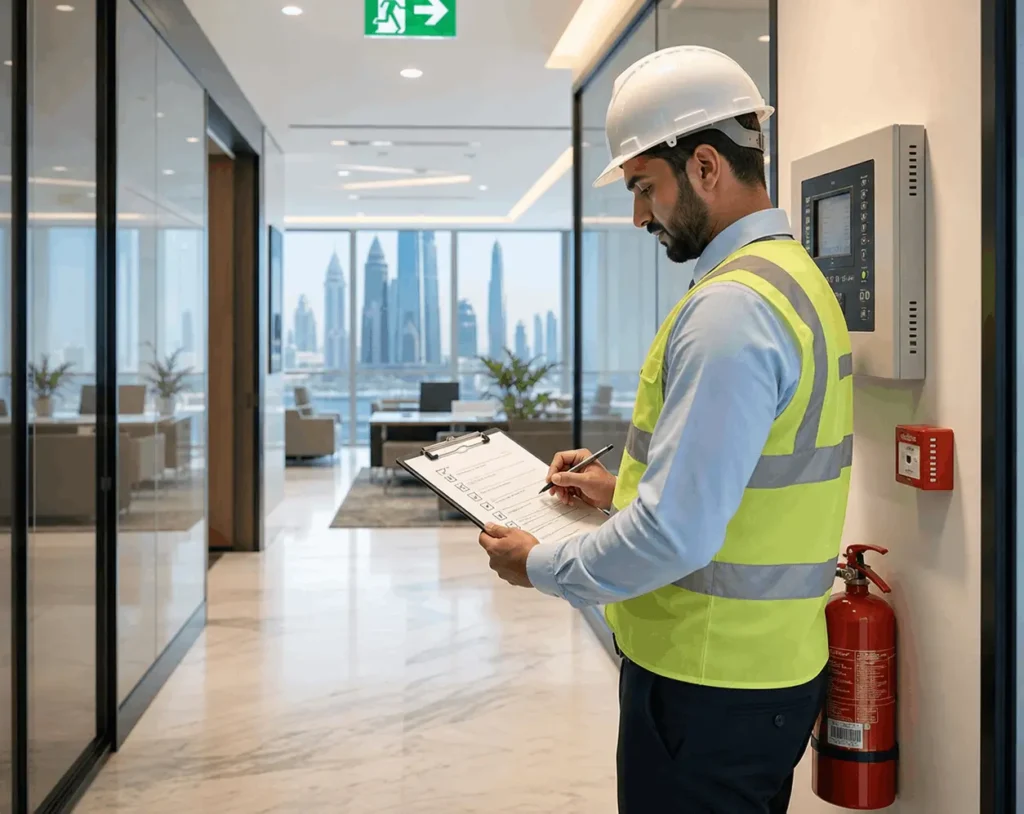
Understanding Fire Safety Compliance in Abu Dhabi
Commercial buildings in Abu Dhabi are required to follow the UAE Fire and Life Safety Code of Practice. These regulations cover important areas such as fire detection, fire suppression, emergency evacuation, passive fire protection, and ongoing system maintenance.
Fire safety compliance also plays an important role in obtaining and renewing trade licenses. If a building fails to meet the required standards, it may face fines, operational delays, inspection failures, or even temporary closure.
For many businesses, working with a professional Fire and safety company in Abu Dhabi helps make the process easier. Experienced service providers can inspect systems, identify faults, carry out maintenance, and ensure the building remains aligned with Civil Defence requirements.
1. Fire Detection and Alarm Systems
A properly functioning fire detection and alarm system is one of the most important parts of a compliant commercial building. It provides early warning, allowing occupants to evacuate quickly and giving emergency teams more time to respond.
Commercial buildings should ensure that:
- Smoke and heat detectors are correctly installed and working properly.
- Manual call points are accessible, visible, and not blocked.
- The fire alarm control panel is in normal condition without active faults.
- Alarm sounders are loud enough to be heard across all required areas.
- Visual warning devices, such as strobes, are operational where needed.
Regular testing should be carried out to confirm that detectors, alarms, and control panels are functioning as expected. Even a minor fault in the alarm system can create serious risks during an emergency.
A well-maintained fire alarm system helps detect problems early and reduces the chance of a fire incident spreading unnoticed.
2. Fire Suppression Systems and Extinguishers
Fire suppression systems are designed to control, contain, or slow the spread of fire before it becomes more dangerous. These systems must be inspected and serviced regularly to remain effective.
Commercial buildings should check that:
- Sprinkler systems are active and free from leaks or blockages.
- Fire pumps are tested regularly and are operating at the required pressure.
- Water storage tanks have sufficient capacity.
- Fire hose reels and related equipment are accessible and functional.
Fire extinguishers are placed in the correct locations and match the fire risk in that area.
Every fire extinguisher should have a valid service tag and should be inspected periodically. Expired, damaged, or inaccessible extinguishers are among the most common issues found during fire safety inspections.
When suppression systems are properly maintained, they can help reduce fire damage and support safer evacuation before emergency services arrive.
3. Emergency Exits and Evacuation Readiness
Safe evacuation is a major part of fire safety compliance. In an emergency, people must be able to leave the building quickly and without confusion.
- To support safe evacuation, commercial buildings should ensure that:
- Emergency exits are always clear and easy to access.
- Corridors, staircases, and escape routes are free from obstruction.
- Exit signs are clearly visible and illuminated.
- Emergency lighting works during power failures.
- Evacuation plans are displayed in visible areas on each floor.
- Assembly points are clearly identified.
Regular fire drills are also important. They help occupants understand evacuation routes, reduce panic, and improve overall emergency response.
Blocked exits, unclear signage, or poorly maintained emergency lighting can create serious safety risks and may also lead to compliance issues during inspections.
3. Emergency Exits and Evacuation Readiness
Safe evacuation is a major part of fire safety compliance. In an emergency, people must be able to leave the building quickly and without confusion.
- To support safe evacuation, commercial buildings should ensure that:
- Emergency exits are always clear and easy to access.
- Corridors, staircases, and escape routes are free from obstruction.
- Exit signs are clearly visible and illuminated.
- Emergency lighting works during power failures.
- Evacuation plans are displayed in visible areas on each floor.
- Assembly points are clearly identified.
Regular fire drills are also important. They help occupants understand evacuation routes, reduce panic, and improve overall emergency response.
Blocked exits, unclear signage, or poorly maintained emergency lighting can create serious safety risks and may also lead to compliance issues during inspections.
4. Passive Fire Protection Systems
Passive fire protection is often overlooked, but it plays a vital role in controlling the spread of fire and smoke. Unlike alarms or sprinklers, passive systems do not need activation. They are built into the structure of the building.
- Important passive fire protection elements include:
- Fire-rated doors that close properly.
- Fire-resistant walls and partitions.
- Sealed openings around cables, ducts, and pipes.
- Fire-rated materials in critical areas.
- Proper compartmentation to slow the spread of fire and smoke.
In Abu Dhabi, façade materials and external cladding must also meet strict fire-resistance standards. This is especially important for high-rise and commercial buildings, where rapid vertical fire spread can create major safety risks.
Passive fire protection gives occupants more time to evacuate and helps emergency responders manage the situation more effectively.
5. Hassantuk Monitoring System
Modern fire safety compliance in Abu Dhabi is closely connected with smart monitoring systems such as Hassantuk.
Fire alarm systems are directly connected to emergency response centres via the Hassantuk system.
The system also helps monitor faults such as power failures, panel issues, or device malfunctions. This makes it useful not only for emergency response but also for maintaining continuous system readiness.
For commercial buildings, being connected to such monitoring systems can support better fire safety management and demonstrate a stronger commitment to compliance.
6. Documentation and Compliance Records
Proper documentation is a key part of fire safety compliance. During inspections, authorities may request records to confirm that fire safety systems are being maintained and tested regularly.
Commercial buildings should keep updated records of:
- Civil Defence compliance certificates.
- Maintenance contracts with approved service providers.
- Fire alarm and suppression system inspection reports.
- Repair and servicing records.
- Fire drill reports.
- Staff safety training records.
- Equipment testing logs.
Missing or outdated documentation can cause problems during inspections, even if the systems are physically present. Keeping records organised helps prove that the building is being
7. Regular Maintenance and Inspection
Fire safety compliance is not something that can be completed once and forgotten. Systems need ongoing inspection, testing, and maintenance to remain reliable.
Regular maintenance helps identify issues such as:
- Faulty smoke or heat detectors.
- Low battery levels.
- Alarm panel errors.
- Pressure drops in suppression systems.
- Damaged wiring.
- Blocked sprinklers or hose reels.
- Expired extinguishers.
In Abu Dhabi, environmental conditions such as heat, humidity, and dust can affect fire safety equipment over time. This makes routine inspections especially important for commercial buildings.
Planned maintenance helps prevent small faults from becoming serious compliance or safety issues.
8. Common Fire Safety Compliance Mistakes to Avoid
Many commercial buildings fail fire safety inspections because of avoidable mistakes. These issues may seem minor during daily operations, but they can create serious risks during an emergency.
Common mistakes include:
Blocking emergency exits with furniture, storage boxes, or equipment.
Allowing fire extinguishers to expire.
Ignoring faults on the fire alarm control panel.
Failing to maintain emergency lighting.
Not keeping proper maintenance records.
Delaying repairs after inspections.
Using unapproved materials for fire-rated areas.
Not conducting regular fire drills.
Addressing these issues early helps reduce risk, avoid penalties, and maintain a safer workplace.
Conclusion
Fire safety compliance in Abu Dhabi requires consistent attention, proper planning, and regular maintenance. For commercial buildings, it is not only about meeting inspection requirements. It is about protecting lives, reducing property damage, and keeping business operations safe.
A complete fire safety checklist should cover fire detection systems, suppression equipment, emergency exits, evacuation planning, passive fire protection, Hassantuk monitoring, documentation, and regular inspections.
Working with an experienced Fire and safety company in Abu Dhabi can help building owners and facility managers stay compliant with Civil Defence standards while ensuring that all systems remain ready for emergencies.
In a city where safety regulations are strictly enforced, maintaining fire safety compliance is one of the most important responsibilities for every commercial property.