
The Financial Impact of Fire System Downtime in Commercial Buildings
The Financial Impact of Fire System Downtime in Commercial Buildings
In commercial buildings, fire protection systems are expected to work continuously without interruption. Most businesses rarely think about them until a fault appears, an alarm panel goes offline, or an inspection reveals a compliance issue.
But in reality, even a few hours of fire system downtime can create serious financial consequences.
For commercial properties in Abu Dhabi, fire safety systems are not only life-safety requirements — they are directly connected to business continuity, insurance validity, tenant confidence, regulatory compliance, and operational stability.
A faulty fire alarm panel, disabled sprinkler line, or prolonged system fault can quickly escalate from a technical issue into a major operational and financial risk.
This is one reason businesses increasingly work with experienced Fire and safety companies in Abu Dhabi to reduce downtime risks and maintain continuous protection across commercial facilities.
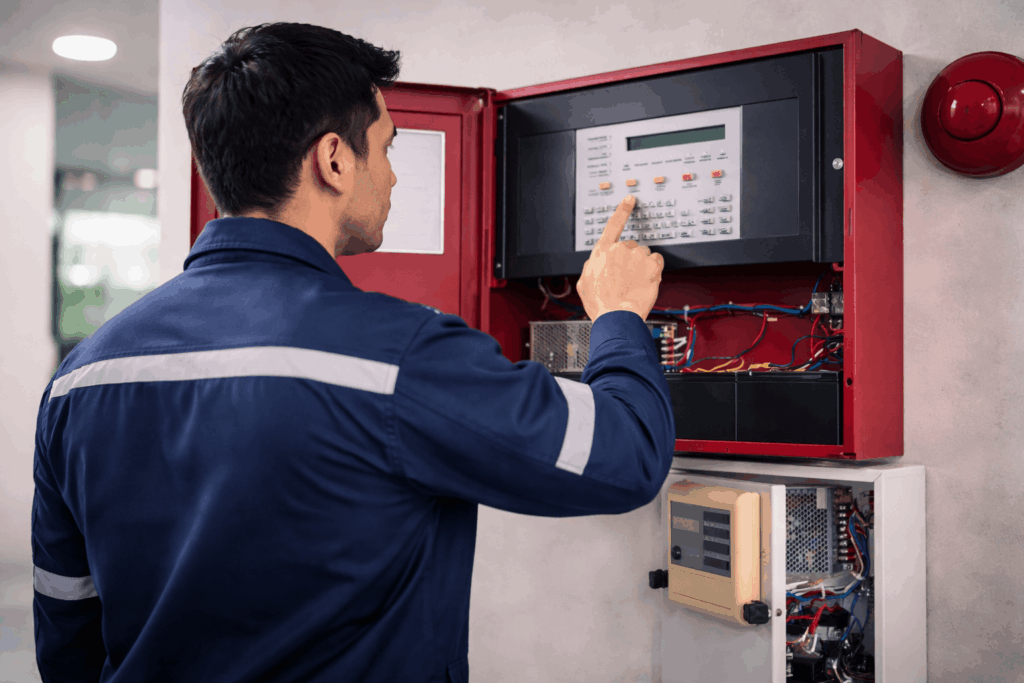
Why Fire System Downtime Is More Expensive Than Most Businesses Realise
Many property owners assume the primary cost of a fire system issue is the repair itself.
In reality, the repair cost is often the smallest part of the problem.
The larger financial impact usually comes from:
- Business interruption
- Regulatory action
- Operational shutdowns
- Insurance complications
- Tenant disruption
- Emergency mitigation costs
- Reputational damage
For high-occupancy commercial buildings, downtime exposure can increase significantly with every passing hour.
In Abu Dhabi’s commercial environment — where offices, retail facilities, hospitality properties, warehouses, and mixed-use developments operate continuously — even short periods of system unavailability can create costly disruptions.
Business Interruption: The Biggest Hidden Cost
One of the largest financial consequences of fire system downtime is operational interruption.
If a critical fire protection system becomes non-functional, businesses may face:
- Temporary evacuation
- Restricted occupancy
- Delayed operations
- Tenant complaints
- Suspended activities until rectification is completed
For commercial buildings, this can affect:
- Rental income
- Retail sales
- Service delivery
- Contract timelines
- Customer experience
In many cases, the financial impact of interrupted operations becomes far greater than the cost of the repair itself.
A shopping facility losing weekend trading hours, a warehouse delaying deliveries, or a corporate tower facing temporary closure can quickly experience substantial financial losses.
Because of this, many businesses work with experienced Fire and safety companies in Abu Dhabi that can provide faster technical support and help reduce operational impact before issues become more serious.
The Regulatory Risk Behind System Downtime
Fire safety standards in Abu Dhabi are governed by strict regulations and compliance requirements set by Civil Defence authorities.
Modern commercial buildings are integrated with smart monitoring platforms such as Hassantuk, which continuously monitor alarm activities, system status, and fault conditions.
If critical systems remain impaired for extended periods, authorities may initiate:
- Compliance reviews
- Site inspections
- Corrective action notices
- Penalties for unresolved violations
In serious cases, operational restrictions or temporary closure notices may also apply until systems are restored and verified.
For businesses operating high-density facilities, prolonged downtime creates both operational and regulatory exposure simultaneously.
This is why working with experienced Fire and safety companies in Abu Dhabi has become increasingly important for commercial property owners focused on maintaining compliance continuity.
Emergency Fire Watch Costs Add Up Quickly
When major fire systems go offline, facilities often cannot continue operating normally without temporary safety measures in place.
In many situations, buildings may need to implement emergency fire watch procedures until systems are restored.
This creates additional expenses such as:
- Dedicated fire watch personnel
- Around-the-clock monitoring
- Emergency response coordination
- Over time, labour costs
- Temporary mitigation arrangements
For large commercial buildings, these costs can increase rapidly if repairs are delayed.
A system fault that initially appeared minor can become expensive simply because downtime management itself requires continuous operational support.
Insurance Risks and Financial Exposure
Insurance providers take fire protection system performance very seriously.
If an incident occurs while systems are:
- Non-functional
- Poorly maintained
- Repeatedly impaired
- Operating with unresolved faults
…insurance claims may become more complicated.
In some situations, insurers may:
- Increase future premiums
- Reduce claim coverage
- Investigate maintenance history more aggressively
- Identify compliance gaps during claim reviews
Buildings with recurring downtime histories are often viewed as higher-risk assets.
For commercial property operators, reducing downtime is not only about compliance — it is also part of long-term financial risk management.
This is one reason many property owners now partner with reliable firefighting companies in Abu Dhabi providers capable of maintaining stronger operational readiness throughout the year.
The Tenant and Reputation Impact
In Abu Dhabi’s competitive commercial property market, reputation matters.
Corporate tenants, retail operators, hospitality groups, and multinational businesses increasingly expect buildings to maintain:
- Stable operations
- Reliable fire protection systems
- Strong compliance records
- Rapid maintenance response capability
Repeated system faults or visible operational disruptions can affect tenant confidence over time.
For premium commercial developments, even temporary safety concerns can influence:
- Lease renewals
- Occupancy confidence
- Tenant retention
- Overall asset reputation
Today, fire system reliability is increasingly viewed as part of overall building quality and operational professionalism.
The Shift Toward Predictive Maintenance
Traditional maintenance models often depend heavily on scheduled inspections alone.
But many commercial buildings are now moving toward predictive maintenance approaches supported by:
- Smart monitoring systems
- Digital reporting platforms
- Connected alarm infrastructure
- Real-time fault notifications
Modern addressable systems can identify:
- Faulty detectors
- Sensitivity drift
- Environmental interference
- Early-stage equipment failures
This allows maintenance teams to resolve issues earlier before they develop into major outages.
Several Fire and safety companies in Abu Dhabi are now using connected technologies and digital monitoring tools to help commercial facilities reduce unplanned downtime and improve long-term system reliability.
Why Downtime Prevention Matters More Than Emergency Repair
Many businesses focus heavily on emergency repair response. But financially, prevention is usually far more valuable than reactive recovery.
Reducing downtime helps businesses:
- Avoid operational disruption
- Maintain tenant confidence
- Reduce compliance pressure
- Protect insurance standing
- Lower long-term maintenance risks
For large facilities, proactive maintenance planning often becomes a direct business continuity strategy rather than simply a technical service requirement.
This is why many organisations prefer working with established Fire and safety companies in Abu Dhabi that focus not only on repairs, but also on long-term system reliability and operational continuity.
Building Financial Resilience Through Better Fire Safety Management
Commercial buildings today depend heavily on uninterrupted operations.
A single unresolved system fault can trigger:
- Regulatory complications
- Revenue disruption
- Tenant dissatisfaction
- Increased liability exposure
- Long-term reputational impact
As buildings become more connected and operational expectations increase, fire safety management is becoming closely tied to broader financial resilience strategies.
Many property owners now view fire protection not simply as a compliance obligation, but as a critical part of protecting long-term asset value and operational stability.
Final Thoughts
Fire system downtime is no longer just a technical maintenance issue.
In modern commercial buildings, it can directly affect:
- Revenue
- Operations
- Compliance
- Insurance exposure
- Reputation
- Tenant confidence
For businesses operating in Abu Dhabi’s fast-moving commercial sector, maintaining reliable and continuously operational fire protection systems has become essential for both safety and financial stability.
Because when critical systems stop working, the financial consequences often begin long before an actual emergency ever occurs.