
The Importance of Fire Detection Systems in High-Rise Buildings
The Importance of Fire Detection Systems in High-Rise Buildings
High-rise buildings are designed to maximise space, support growing urban populations, and create modern commercial and residential environments. However, when it comes to fire safety, tall structures present challenges that low-rise buildings do not. Longer evacuation times, complex layouts, multiple occupancy zones, and the rapid movement of smoke through vertical shafts make early detection critical.
In these environments, fire detection systems are not simply a regulatory requirement. They are one of the most important life safety measures within the building. A properly designed system can provide early warning, support evacuation, activate linked safety systems, and help emergency teams respond faster.
For cities such as Abu Dhabi, where high-rise towers continue to shape the skyline, reliable detection technology has become an essential part of safe building management. For any firefighting company in Abu Dhabi, protecting tall buildings begins with dependable early warning systems.
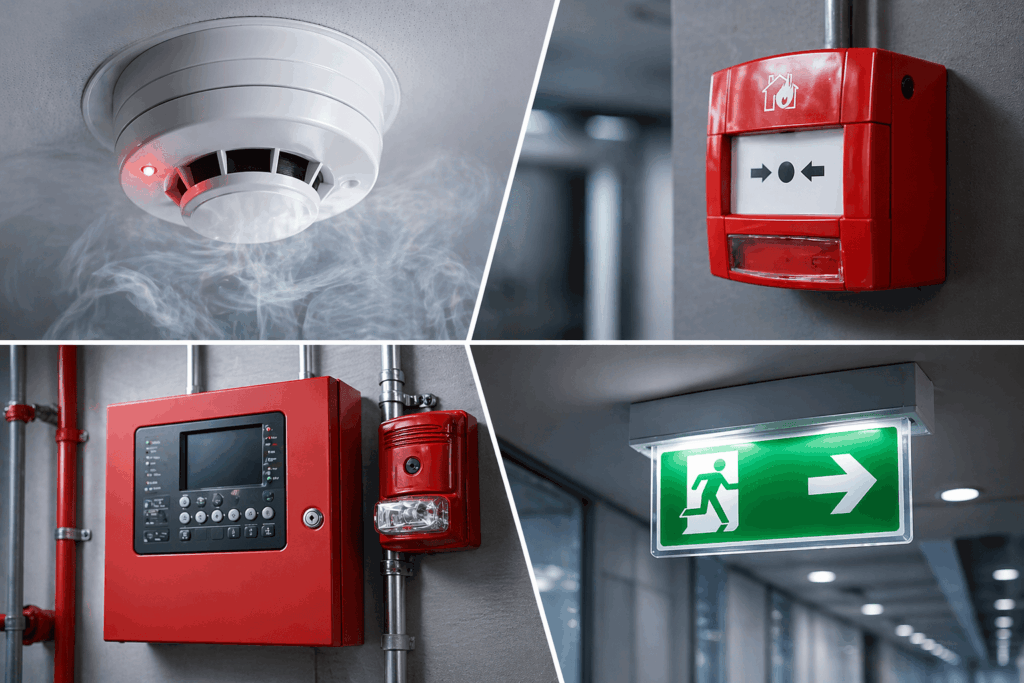
Why High-Rise Buildings Face Greater Fire Risk
A fire on the ground floor of a small building and a fire on the upper level of a tower are very different situations. In high-rise buildings, occupants may need more time to evacuate. Stairwells can become congested, elevators may be recalled, and people on upper floors may not immediately understand the level of risk. Smoke can also spread quickly through lift shafts, service ducts, and stair cores due to pressure differences, often known as the stack effect. Because of these factors, the first few minutes of a fire incident are extremely important. This is where well-designed fire detection systems become essential. The earlier the warning, the more time occupants and responders have to act.Early Warning Saves Time and Lives
The most immediate role of a detection system is to alert people before conditions become dangerous. In a high-rise environment, even a short delay can affect evacuation routes and emergency coordination. Smoke can move upward quickly, reducing visibility and creating panic if occupants are not informed early. Modern systems use smoke detectors, heat detectors, and intelligent panels to identify hazards in their early stages. Once activated, alarms can trigger voice announcements, send alerts to monitoring centres, and begin pre-programmed safety responses. For building owners, investing in a reliable fire alarm system in Abu Dhabi is not just about compliance. It is about giving occupants valuable time during an emergency.Integration With Other Life Safety Systems
In modern towers, fire safety depends on multiple systems working together rather than alarms working alone. When a fire is detected, the system may automatically:- Recall elevators to safe floors
- Shut down HVAC units to limit smoke circulation
- unlock emergency exits
- activate smoke extraction systems
- Start pressurisation fans for stairwells
- notify emergency monitoring centres