
The Role of Facility Management in Creating Safe and Productive Workspaces
The Role of Facility Management in Creating Safe and Productive Workspaces
Walk into any well-run commercial building in Abu Dhabi and something immediately feels right. The air is cool and clean, the lights are properly calibrated, the corridors are clear, and everything just works. That experience does not happen by accident. It is the result of deliberate, ongoing facility management — a discipline that has quietly evolved from a back-office maintenance function into one of the most strategically significant operations a business can invest in.
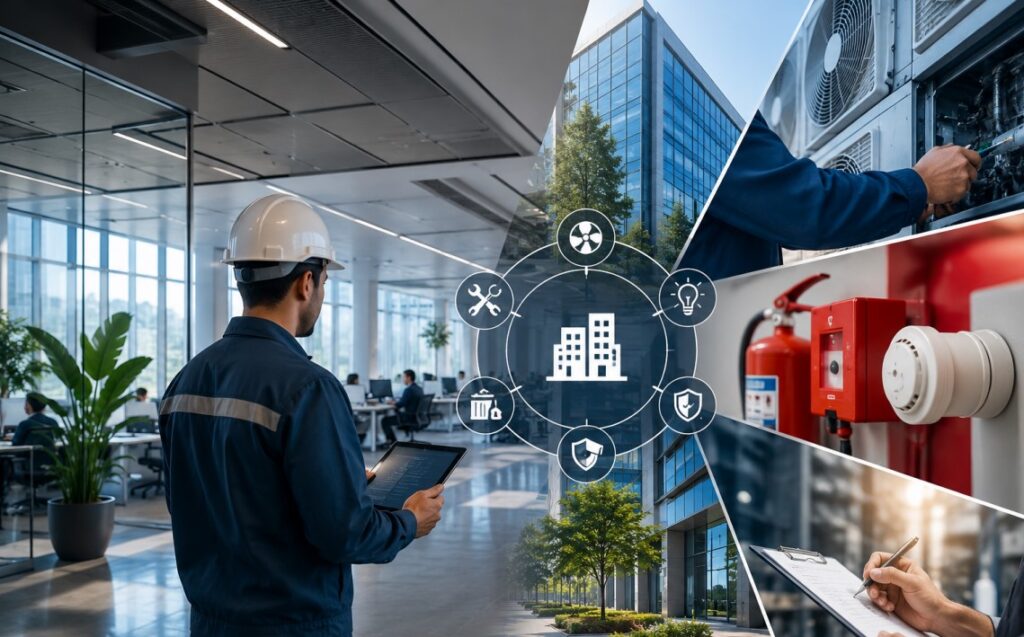
What Facility Management Actually Covers
At its core, facility management is the coordinated oversight of a building’s people, infrastructure, technology, and support services. The goal is straightforward: keep a facility operating safely and efficiently, day in and day out, without disruption. In practice, that responsibility touches almost every system in a building — HVAC, electrical and mechanical infrastructure, fire safety systems, security and access control, cleaning and hygiene, space planning, and energy consumption. It also includes the less visible work of regulatory compliance: maintaining documentation, scheduling inspections, and ensuring that everything from emergency lighting to evacuation routes meets current standards. What has changed significantly over the past decade is the philosophy behind all of this. Professional facility management companies in Abu Dhabi are no longer simply reactive — waiting for something to break before sending a technician. The emphasis has shifted decisively toward preventive planning, continuous monitoring, and proactive risk management.
1.Why Businesses Cannot Afford to Treat This as a Secondary Function
Poorly managed facilities tend to reveal themselves in ways that are both costly and avoidable. Equipment fails at the worst possible moment. Safety incidents occur that could have been prevented with routine inspections. Energy bills climb because no one is optimising building performance. Employees complain about temperature fluctuations, poor air quality, or noise, and productivity quietly erodes as a result. None of these outcomes is inevitable. But they are common when organisations treat facility management as an afterthought rather than an operational priority. On the other hand, buildings that are well-managed tend to run more predictably. Equipment lasts longer. Unplanned downtime becomes rare. Employees notice that their environment supports rather than hinders their work. And businesses find that compliance audits produce far fewer surprises.
2. Safety Is the Foundation, Not a Feature
Workplace safety sits at the centre of everything facility management does. Fire suppression systems need regular testing. Emergency lighting must function reliably under pressure. Electrical infrastructure carries genuine risk if not maintained correctly. Access control systems need to work every time. Facility managers build safety into the rhythm of operations through routine inspections, documented maintenance schedules, risk assessments, and compliance monitoring. They also support emergency preparedness — drilling response procedures, testing equipment, and ensuring that when an incident does occur, the building and its occupants are not caught unprepared. For organisations operating across commercial, industrial, and residential sectors, this layer of protection is not optional. It is what separates buildings that manage risk from buildings that accumulate it
3. The Connection Between the Physical Environment and Workplace Performance
There is a tendency to think of productivity as a function of people and technology alone. The physical environment rarely gets enough credit for the role it plays. Research consistently shows that factors like indoor temperature, air quality, lighting, and noise levels affect concentration, comfort, and cognitive performance. A workspace that is too warm reduces alertness. Poor ventilation contributes to fatigue and illness. Inadequate lighting causes eye strain and headaches. These are not minor inconveniences — they compound across a working day and across an entire workforce. Effective facility management addresses these conditions directly. Maintaining comfortable indoor temperatures, ensuring proper ventilation and air quality, keeping workspaces well-lit and clean — these are not luxuries. They are operational levers that determine how effectively employees can do their work. Modern facility management services also help businesses design and maintain flexible, collaborative environments that support changing work patterns and employee wellbeing programmes.
4.The Abu Dhabi Context: Why the Stakes Are Higher Here
Operating a facility in Abu Dhabi comes with environmental pressures that most other markets simply do not face. Summer temperatures routinely exceed 45°C, placing extraordinary demands on HVAC infrastructure. When cooling systems underperform — or fail — the consequences go beyond discomfort. Indoor air quality deteriorates, equipment stress increases, and in extreme cases, the workplace becomes genuinely unsafe. Dust accumulation, humidity fluctuations, and the sheer duration of the hot season mean that building systems here work harder and wear faster than in more temperate climates. Maintenance schedules that might be adequate elsewhere often prove insufficient in this environment. This is precisely why the role of experienced facility management companies in Abu Dhabi is so critical. Understanding local conditions — and building maintenance strategies around them — is what keeps buildings functional and occupants safe through the most demanding months of the year.
4. Compliance as an Ongoing Responsibility
Regulatory requirements in Abu Dhabi span workplace safety, fire protection, building maintenance, and environmental standards. Meeting these requirements is not a one-time exercise. It demands continuous attention — regular inspections, up-to-date documentation, scheduled testing, and clear accountability. Facility management teams manage this complexity on behalf of the organisations they serve. They track maintenance schedules, coordinate audits, maintain compliance records, and ensure that fire safety obligations are met in full. The consequences of falling short are significant. Penalties, operational disruptions, and reputational damage are real risks — but so is the straightforward danger of operating a building that does not meet its safety obligations. Working with facility management companies in Abu Dhabi that understand local regulatory frameworks is one of the most effective ways to manage this exposure.
5. Preventive Maintenance: The Logic Behind Getting Ahead of Problems
Perhaps the most tangible shift in modern facility management is the move away from reactive maintenance. Waiting for equipment to fail before attending to it is expensive in multiple ways — there are the direct repair costs, the cost of downtime, and the secondary effects on operations and safety. Preventive maintenance works on a different logic. By servicing HVAC systems, electrical infrastructure, plumbing, elevators, fire safety equipment, and other building assets on a regular schedule, facility teams catch deterioration early, before it becomes a failure. Equipment lasts longer. Performance stays consistent. Energy consumption remains manageable. Safety is not compromised by unexpected breakdowns. For organisations managing large or complex facilities, this proactive approach often delivers significant savings — not just in avoided repair costs, but in the operational continuity it protects.
6.Sustainability and the Rise of Smart Building Management
Sustainability is no longer a peripheral concern for facility managers — it is increasingly central to how buildings are expected to perform. Across Abu Dhabi, organisations face growing pressure to demonstrate responsible energy consumption, efficient water use, and sound waste management. Modern facility management services engage directly with these priorities. Optimising HVAC scheduling, monitoring energy use across building systems, identifying inefficiencies before they escalate — these are now routine components of professional facility management practice. Smart building technologies have accelerated this shift considerably. Real-time monitoring of occupancy, air quality, energy consumption, and equipment performance gives facility managers the data they need to make better decisions — faster. Rather than responding to conditions after they have already affected operations, well-instrumented buildings allow for genuinely proactive management.
7. Where Facility Management Is Headed
The next few years will see facility management change further and quickly. Predictive maintenance platforms, powered by IoT sensors and AI-driven analytics, are already moving from pilot projects into standard practice. Building Management Systems are becoming more sophisticated, integrating data from multiple sources to give a comprehensive picture of facility performance in real time. The shift is from management-by-schedule to management-by-insight. Buildings will increasingly flag their own problems before those problems manifest as failures. Facility teams will spend less time responding and more time optimising — for energy performance, occupant comfort, safety, and long-term asset health. Business continuity planning, occupant wellbeing, and sustainability will sit alongside maintenance and compliance as core priorities for any professional facility management operation.
8.Closing Thoughts
Facility management has earned its place as a strategic function. The businesses that recognise this — and invest accordingly — operate safer, more productive, more compliant, and more sustainable workplaces than those that treat it as a cost to be minimised. For organisations across Abu Dhabi, partnering with professional facility management companies brings more than technical capability. It brings knowledge of local conditions, regulatory requirements, and industry standards that directly shapes how well a building serves the people inside it — and the business it supports.