
Why Fire System Maintenance in Abu Dhabi Is No Longer Optional for Buildings
Why Fire System Maintenance in Abu Dhabi Is No Longer Optional for Buildings
Fire safety in Abu Dhabi is no longer treated as a one-time checklist. It has moved into something more continuous, more closely monitored, and far less forgiving when overlooked.
Buildings today are expected to maintain fully functional fire protection systems at all times. Not just during inspections, not just at the time of installation—but every day, without exception. This shift has made firefighting system maintenance a necessary part of building operations rather than an occasional responsibility.
In many cases, issues don’t come from how systems are installed, but from how they are maintained over time.
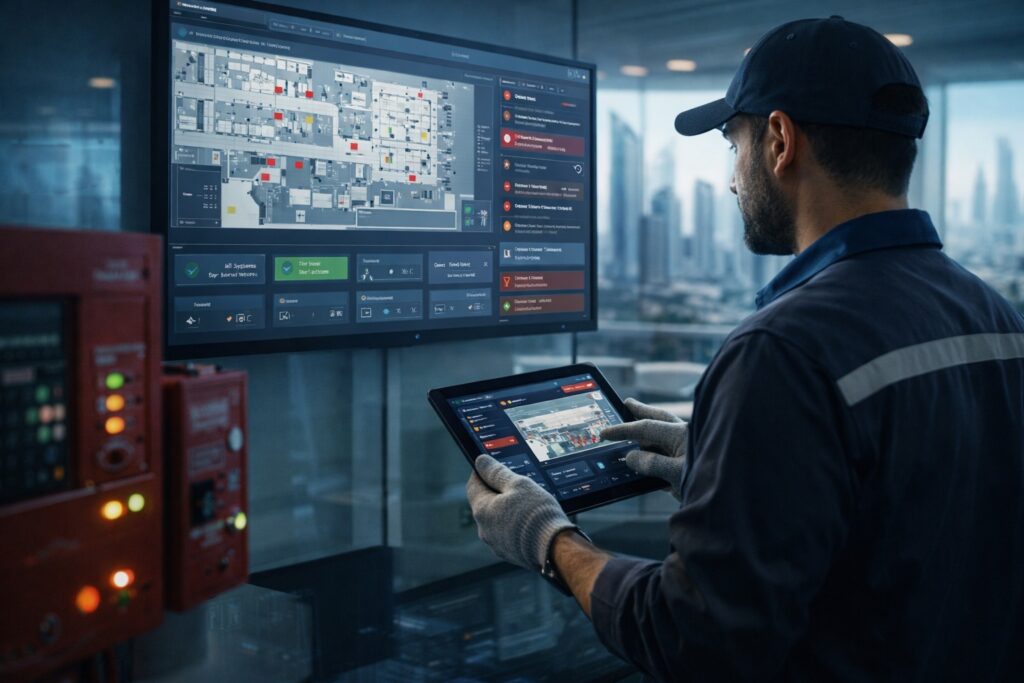
From Installation to Ongoing Accountability
Fire systems are designed to work instantly, but they do not stay that way on their own.
Detectors lose sensitivity. Components wear down. Environmental conditions interfere. None of these changes happens overnight, which is why they often go unnoticed until systems are tested or inspected.
This is where fire fighting system maintenance becomes essential. It keeps systems aligned with how they are supposed to perform, not how they performed when first installed.
There has been a clear shift in how this is viewed. Maintenance is no longer treated as support work—it is part of the system itself.
Maintenance Is Now a Legal Requirement, Not a Choice
One of the biggest shifts in Abu Dhabi’s fire safety landscape is how strongly maintenance is enforced.
Building owners are required to maintain fire protection systems under a valid Annual Maintenance Contract (AMC) with an approved contractor. This is not limited to large commercial buildings. It applies to most facilities, including residential and industrial properties.
Without a valid maintenance contract, a building is considered non-compliant. That alone can lead to penalties, but the impact goes further than fines.
In many cases, compliance is directly linked to operational approvals. Without proper maintenance certification, businesses may face difficulties in renewing trade licenses or maintaining occupancy permissions.
This has effectively made maintenance part of a building’s operational foundation rather than a support activity.
Hassantuk Has Changed How Systems Are Monitored
Another major factor behind the shift toward mandatory maintenance is the introduction of centralized monitoring systems like Hassantuk.
Fire systems are no longer isolated within buildings. They are connected to a network that continuously monitors performance. Any fault, whether it is a communication issue, power failure, or device malfunction, can be detected almost immediately.
Instead of relying only on scheduled inspections, systems are now under constant observation. Issues that may have gone unnoticed in the past are now identified in real time.
This level of monitoring makes it difficult for poorly maintained systems to go undetected. It also increases the expectation that systems must remain in working condition at all times.
What Happens When Maintenance Is Ignored
When maintenance is inconsistent, problems build quietly.
A detector may still appear active but respond slower than expected. A control panel may function but fail under load conditions. Backup systems may exist but not hold charge when required.
These are not always visible faults, which is why they are often missed until inspections—or worse, during an actual emergency.
Authorities have responded to this by tightening enforcement. Penalties can range from significant fines to operational restrictions. In more serious cases, buildings may not be allowed to function until issues are resolved.
The Impact of Continuous Monitoring Systems
The introduction of centralized monitoring systems has changed how fire safety is managed.
Fire systems are now connected to platforms that monitor their status continuously. Any fault—whether it is a device issue, communication failure, or power interruption—can be detected almost immediately.
This has reduced the gap between system failure and detection. It has also increased the importance of fire fighting system maintenance, because faults are no longer hidden between inspection cycles.
Systems are expected to remain in working condition at all times, not just during scheduled checks.
Environmental Factors That Affect System Performance
Local conditions in Abu Dhabi play a larger role than often expected.
Dust accumulation is a consistent issue. Over time, it affects how detectors respond, sometimes causing false alarms, sometimes delaying detection.
Heat places stress on batteries and mechanical components. Extended exposure can reduce performance gradually. Humidity also affects internal system parts, especially in enclosed or sensitive equipment.
These factors make fire fighting system maintenance less about routine servicing and more about adapting systems to real operating conditions.
Maintenance Now Covers More Than Expected
The scope of maintenance has expanded.
It no longer focuses only on alarms and detection devices. Passive elements such as fire doors and containment systems are now part of regular checks.
These elements do not trigger alarms, but they control how fire and smoke spread. Even minor issues—like a door that does not seal properly—can affect overall safety.
This wider scope has made fire fighting system maintenance more detailed and more critical than before.
Financial and Legal Exposure
Maintenance is increasingly tied to financial risk.
Insurance providers often require proof that systems have been properly maintained. Without valid records, claims related to fire damage may be challenged or denied.
Responsibility is also no longer limited to one party. Building owners, operators, and in some cases tenants, may all be held accountable depending on the situation.
This makes maintenance less about compliance alone and more about risk management.
Choosing the Right Support Matters
Managing fire systems requires more than basic servicing.
Working with experienced Fire fighting companies in abu dhabi ensures that systems are inspected properly, faults are identified early, and compliance requirements are met without gaps.
A reliable Fire and safety company in abu dhabi also brings structure to maintenance—clear schedules, proper documentation, and consistency in how systems are handled over time.
This level of support becomes especially important in buildings where systems are interconnected and more complex.
A System That Needs Ongoing Attention
Fire safety systems are built to respond instantly, but maintaining that readiness takes continuous effort.
Technology is evolving, and systems are becoming more advanced. Monitoring is more detailed, and expectations are higher. But none of this removes the need for regular servicing.
If anything, it makes fire fighting system maintenance more important, not less.
Conclusion
Fire system maintenance in Abu Dhabi has moved well beyond routine servicing. It is now a requirement shaped by regulation, monitoring, and real-world conditions.
Systems that are not maintained may still appear functional, but their reliability cannot be assumed when it matters most.
With stricter enforcement, continuous monitoring, and increasing accountability, maintenance is no longer something that can be postponed.
For buildings operating in Abu Dhabi today, fire fighting system maintenance is not optional. It is part of maintaining safety, compliance, and operational stability over time.